The Saab Whaletail
The Saab Whaletail – Evolving the Idea
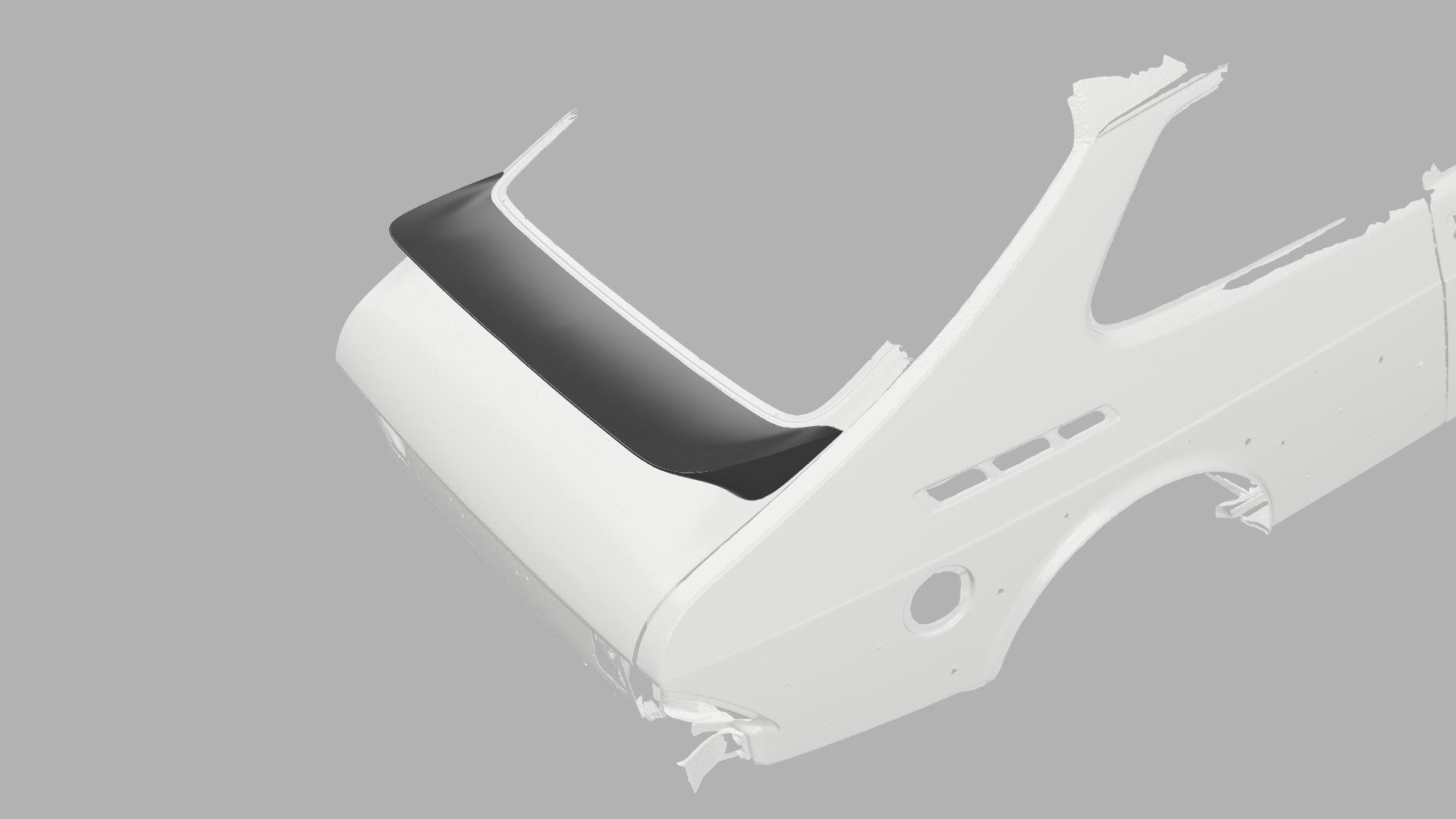
When you spend enough time with a part — really with it, measuring every surface, scanning every curve, rebuilding it from scratch in CAD — you start to see it differently. That’s what happened when I began developing a truly accurate replica of the Saab 900 whaletail. Not the usual approach of pulling a mould from an old plastic original and calling it done, but properly: 3D scanning and surface modelling. Understanding the geometry from the inside out.
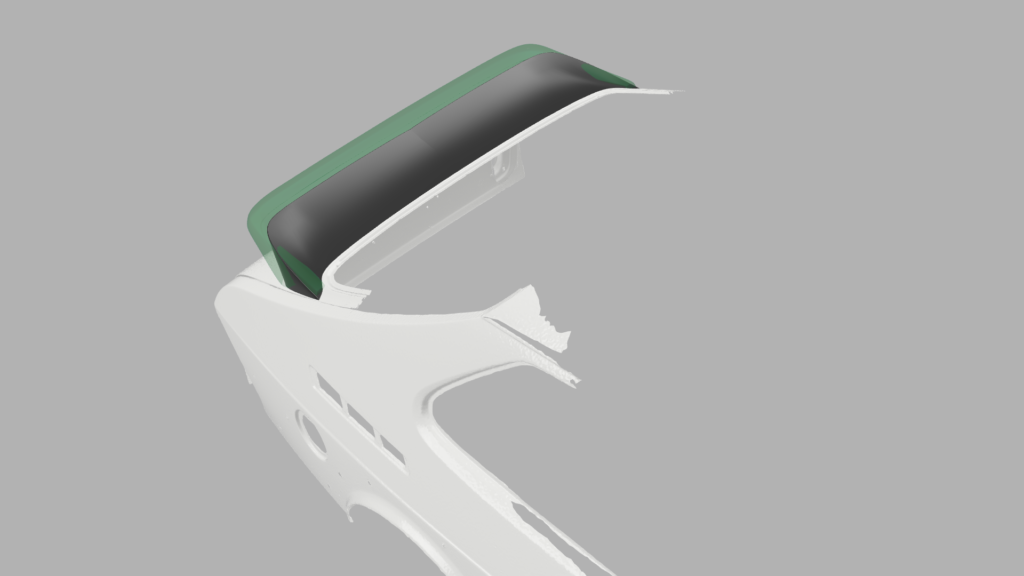
Somewhere in the middle of that process, a parallel question started forming. The whaletail is a bold piece. It makes a statement. But what would a more reserved version look like — something sitting between the whaletail and a standard small spoiler, splitting the difference in size without losing what makes the original feel like it belongs on a 900? Not a compromise, but a deliberate design in its own right. And critically, something that wouldn’t catch your eye immediately. The kind of thing that looks right before you’ve figured out exactly why.
Finding the In-Between
The challenge with a design like this is that it can easily fall into no man’s land — not bold enough to feel intentional, not subtle enough to feel refined. The design language had to stay very Saab. Clean, considered, nothing gratuitous.
The upper surface profile ended up staying very close to the whaletail’s base section. That was a deliberate call. If the transition line and surface read the same way as the original, the new piece should feel like it belongs rather than like something grafted on from a different car entirely. Familiar at a glance. Different only once you know what you’re looking at.
This is also just the beginning of the design process. What’s on the car now is iteration one. There will be more — adjusted heights, tweaked trailing edge angles, different chord lengths — each one printed and tested before anything gets taken further. CAD makes it easy to explore variations quickly, and with 3D printing in the loop, there’s no reason to commit to anything until the proportions are genuinely right.
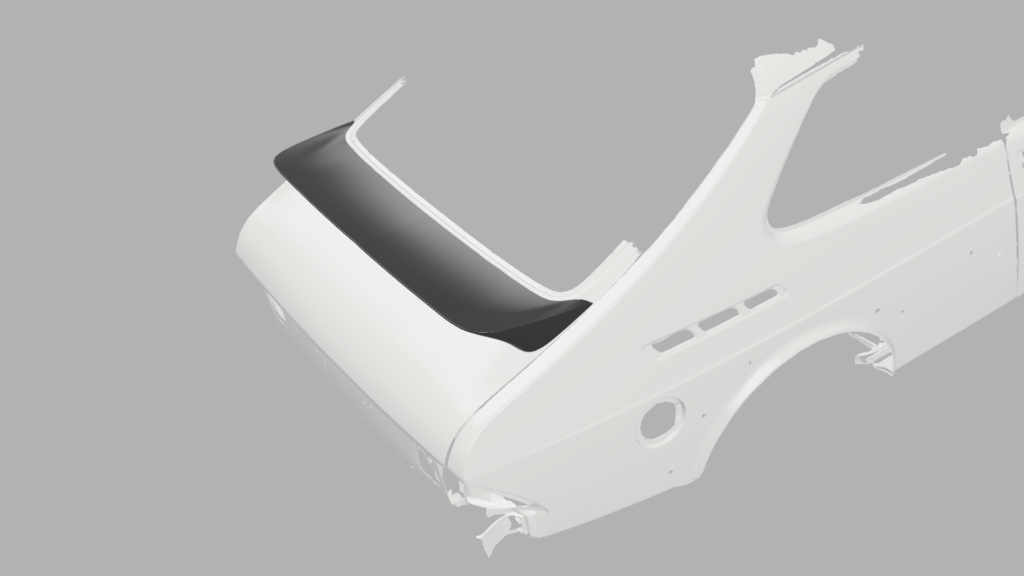
Testing Proportions in Real Life
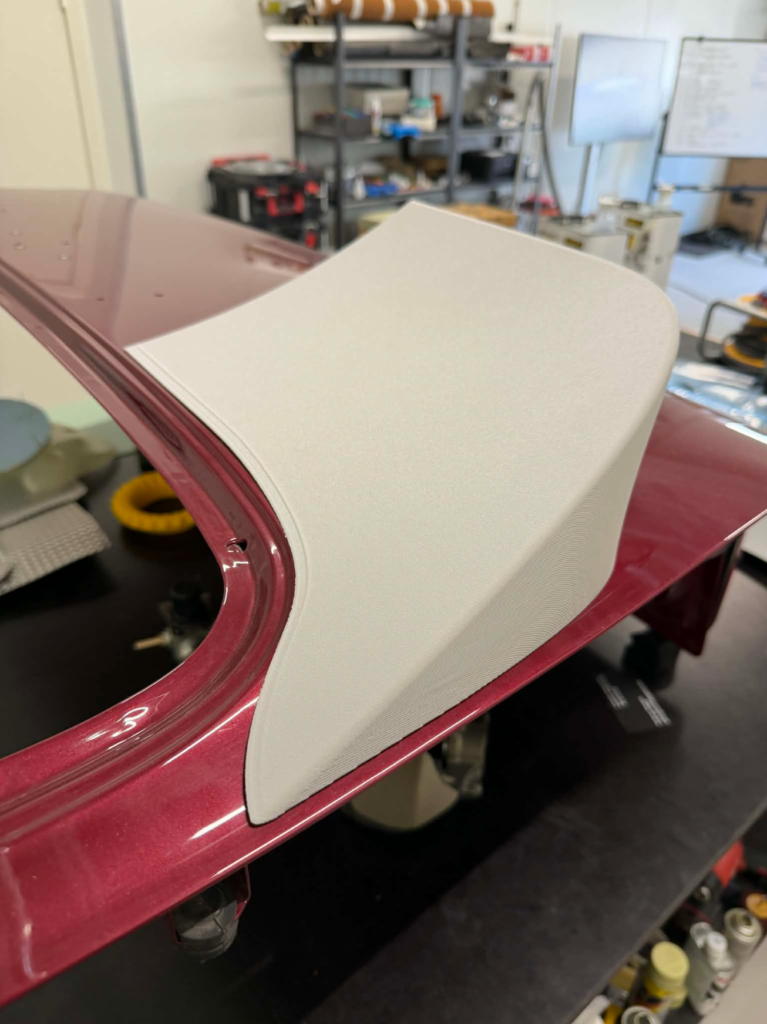
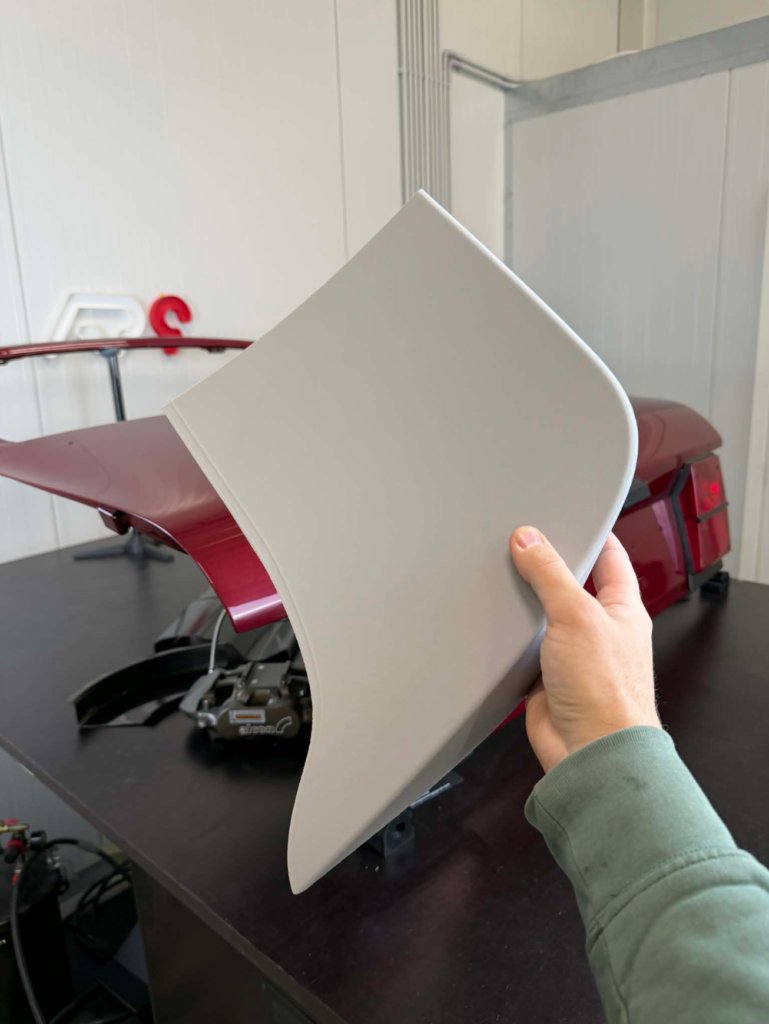
Renders only tell you so much. Once the proportions felt right in CAD, I 3D printed a set of test pieces to put on the car and simply look at them. Standing behind the car, changing the angle, living with it for a bit — that’s where the real decisions get made.
The prints aren’t precious. They’re purely about proportion and flow: does the height work with the roofline, does the trailing edge sit right, does the rear read heavier or lighter than it should? The whaletail lip is printed alongside as a direct reference so I can swap pieces and compare the two without relying on memory.
Where This Is Going
No firm destination yet. This is still an experiment — playing with proportions to see if a satisfying middle ground actually exists, or whether the idea only works in theory. There’s no tooling planned, no timeline.
For the aerodynamically curious: yes, CFD is on the radar, but that conversation belongs much later in the process. Running simulation on a shape that’s still changing week to week would be getting ahead of things. When the geometry stabilises and there’s an actual candidate worth analysing, that’s when it becomes a useful tool rather than just an interesting distraction. One step at a time.
Early signs are good regardless. The proportions feel more at home on a standard, unwidened 900 than the full whaletail does. And for owners who want something distinctive without announcing it — something that rewards a second look rather than demanding a first one — that might be exactly the point.
More as the testing continues.
[Image: Rear three-quarter view with test piece fitted]