Building Brakes From Scratch — A Project That Kept Escalating
When I started the restoration of my Saab 900, I knew two things: I wanted different wheels, and I wanted better brakes. What I didn’t anticipate was how far that second decision would take me.
What began as a straightforward upgrade turned into a full engineering project — custom calipers, bespoke mounting hardware, carbon cooling ducts, and a workflow that touched 3D scanning, CAD, CNC machining, and prepreg composites before it was done. Not because I planned it that way, but because each step revealed the next logical one. That’s how these things go.
Starting With the Calipers
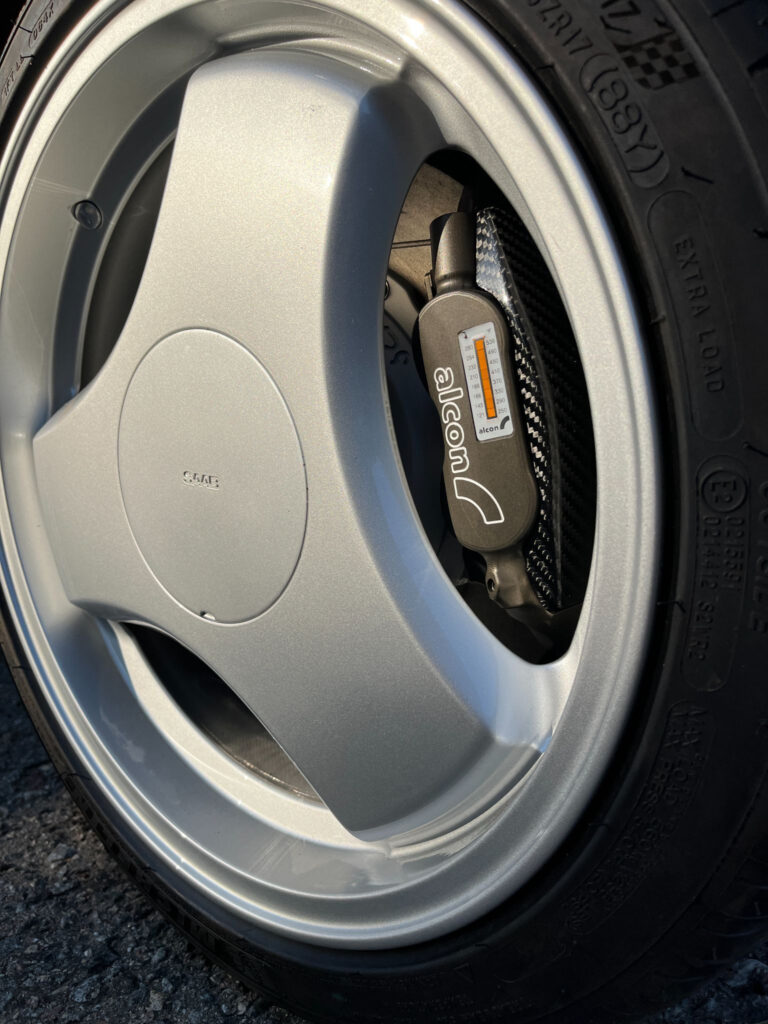
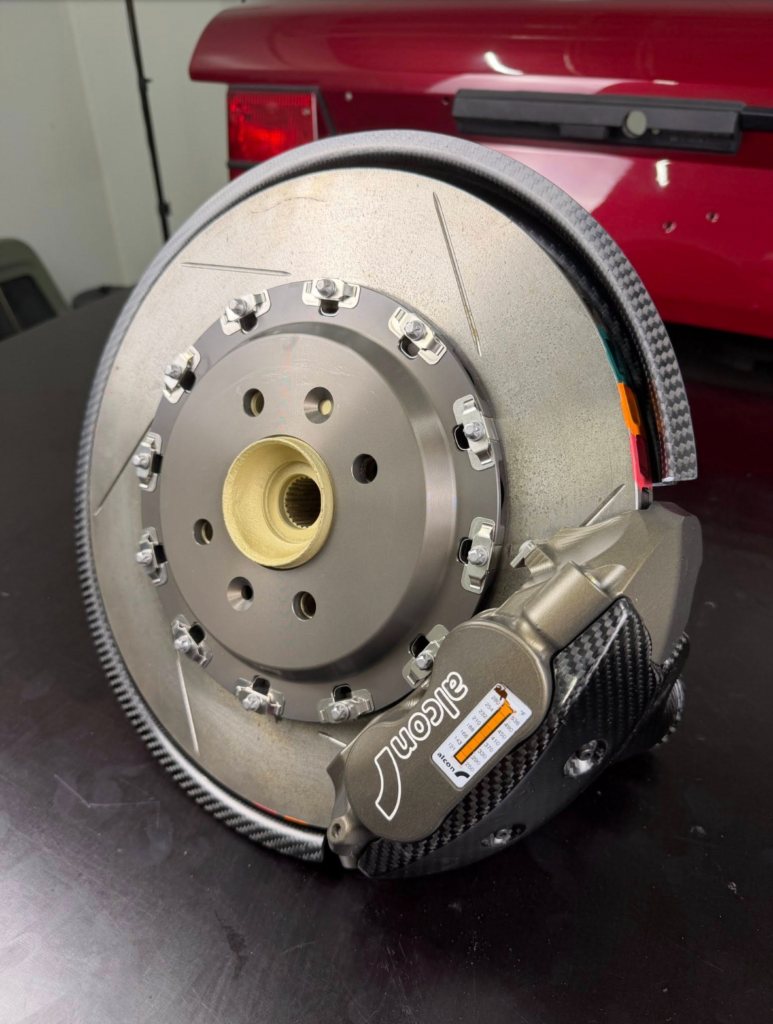
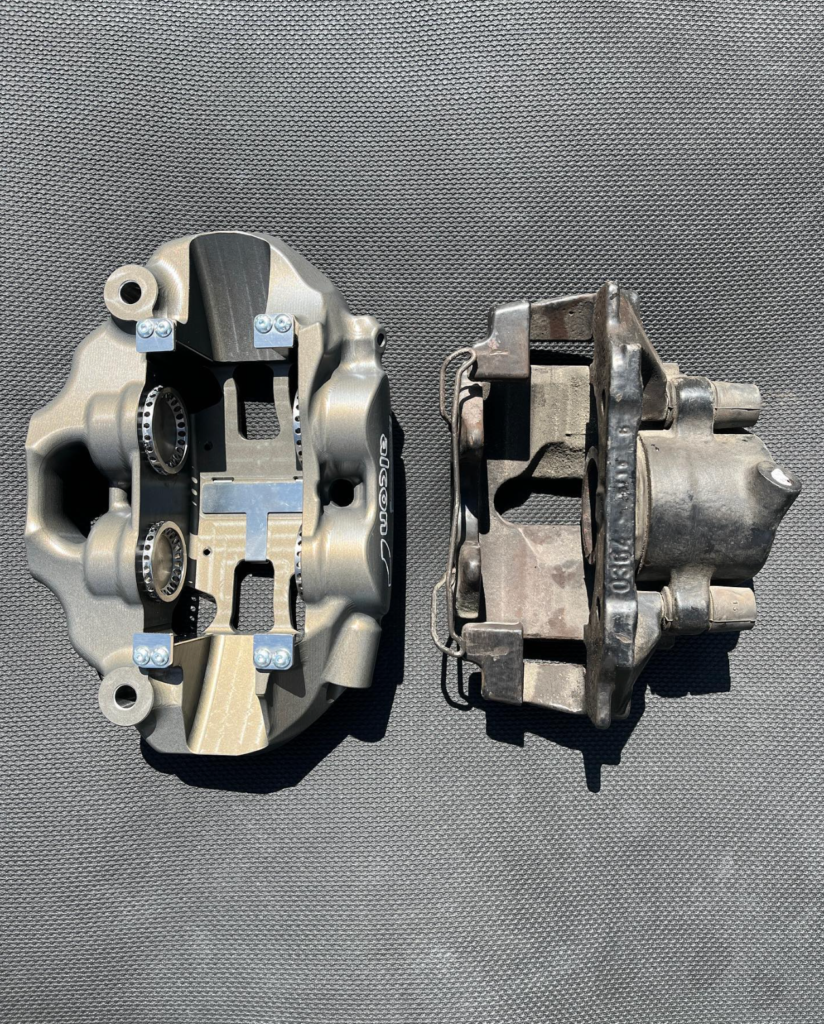
The caliper choice set the tone for everything that followed. I sourced monoblock units machined from billet, with internally drilled fluid passageways — a design approach borrowed directly from motorsport. Stiff, light, and engineered without compromise. A single front caliper came in 3kg lighter than the original Saab 9000 unit it was replacing. With lighter rears as well, the total saving across all four corners was 9.4kg from calipers alone. On a car of this age and weight, that’s a meaningful number — and unsprung weight at that.
What made the caliper choice interesting beyond the spec sheet is where these units actually come from. The same calipers are used on WRC Rally 2 cars. Active competition hardware, on a restored Saab 900. The engineering case for them needed no further argument.
The problem, as with any non-standard caliper on a period car, is that nothing fits without work. The geometry is different, the disc size is different, and the original knuckle was designed around a completely different setup. That’s where the real project began.
Scanning, CAD, and Making It Fit
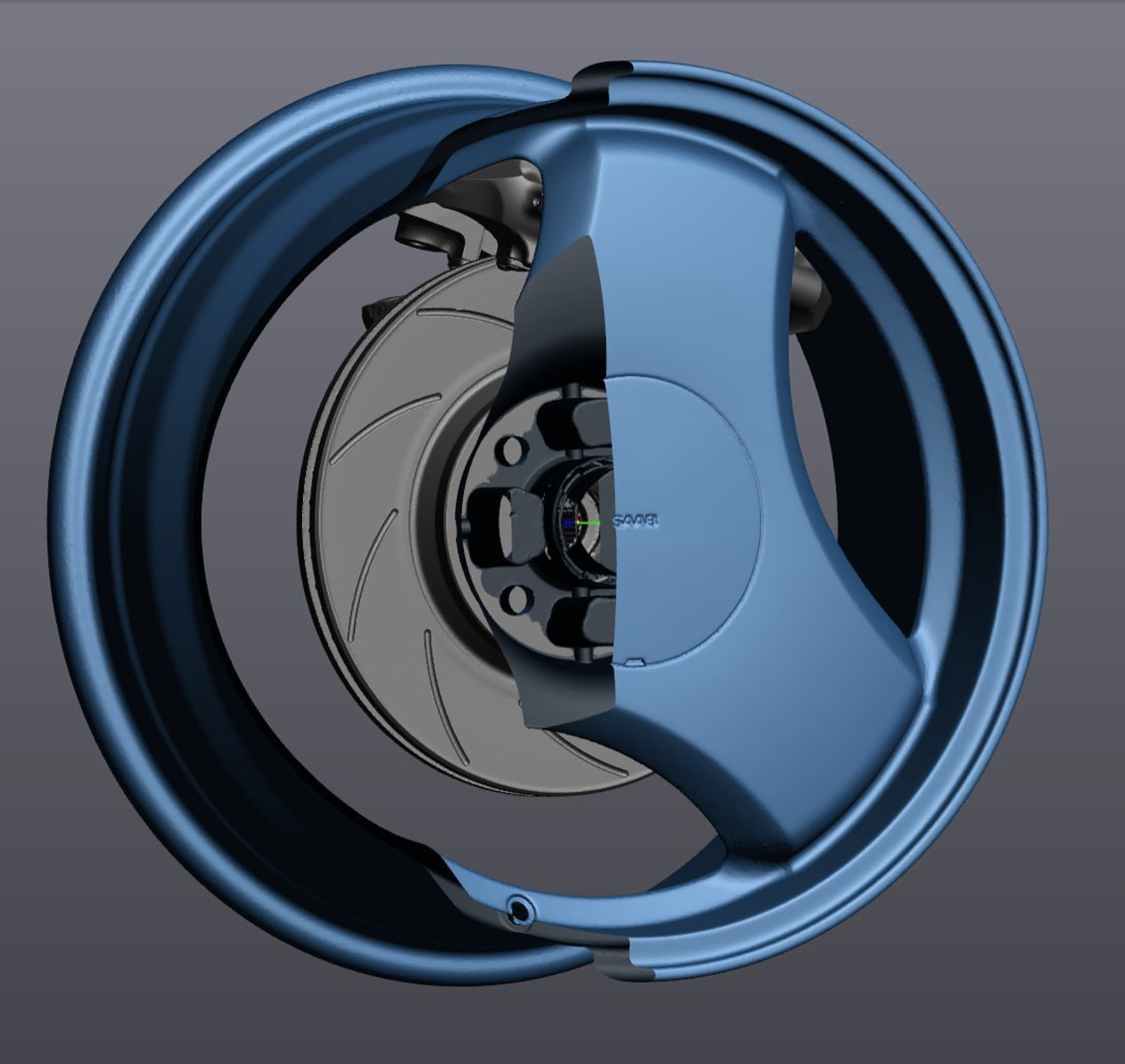
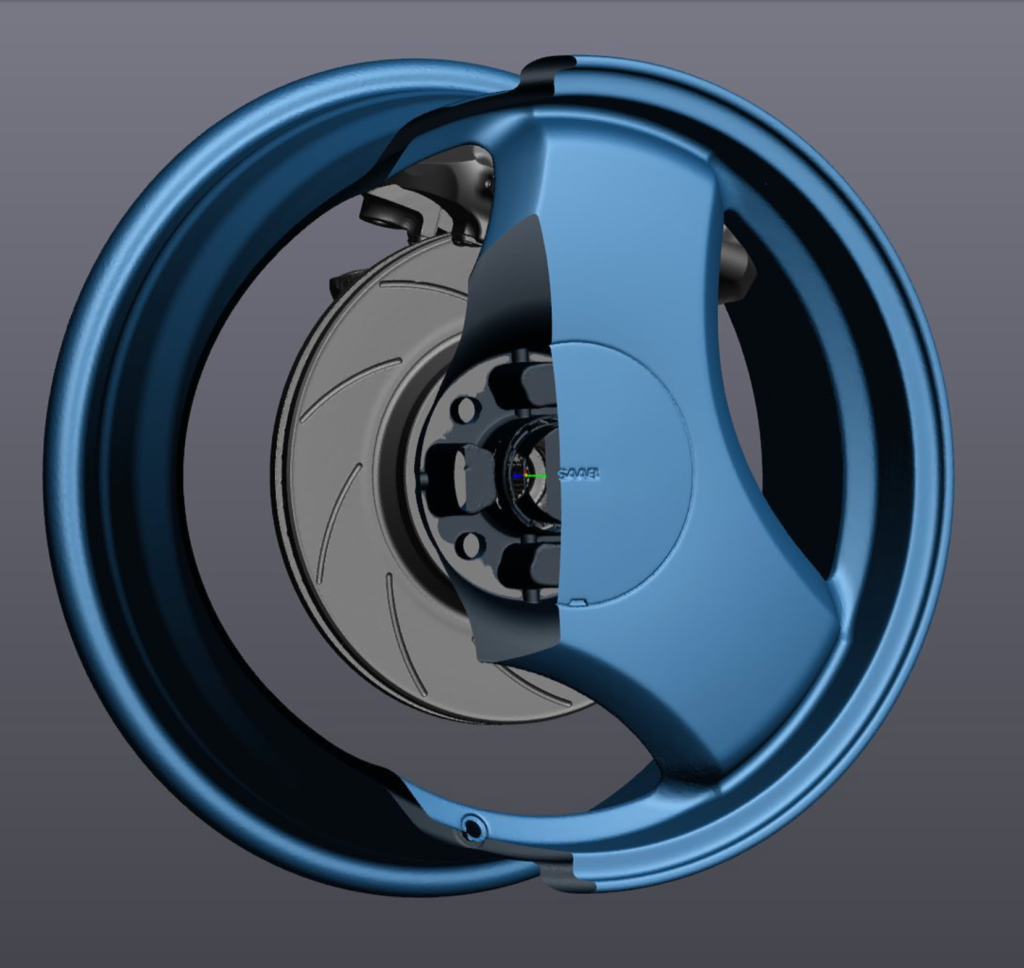
With 17-inch wheels fitted, there was room for a larger disc than standard. But knowing there’s space and knowing exactly how much space are two different things. 3D scanning the wheel, steering knuckle, and new caliper gave precise geometry to work from — a digital environment where the adapter bracket and disc bell could be designed with confidence that clearances were real, not estimated.
The resulting bracket was CNC machined to spec. One complication: the bracket needed to sit on the opposite side of the knuckle from the original setup, meaning that face of the knuckle required machining flat first — about 0.5mm, confirmed from the scan data. Small detail, important detail.
Cooling — The Part That Kept Growing
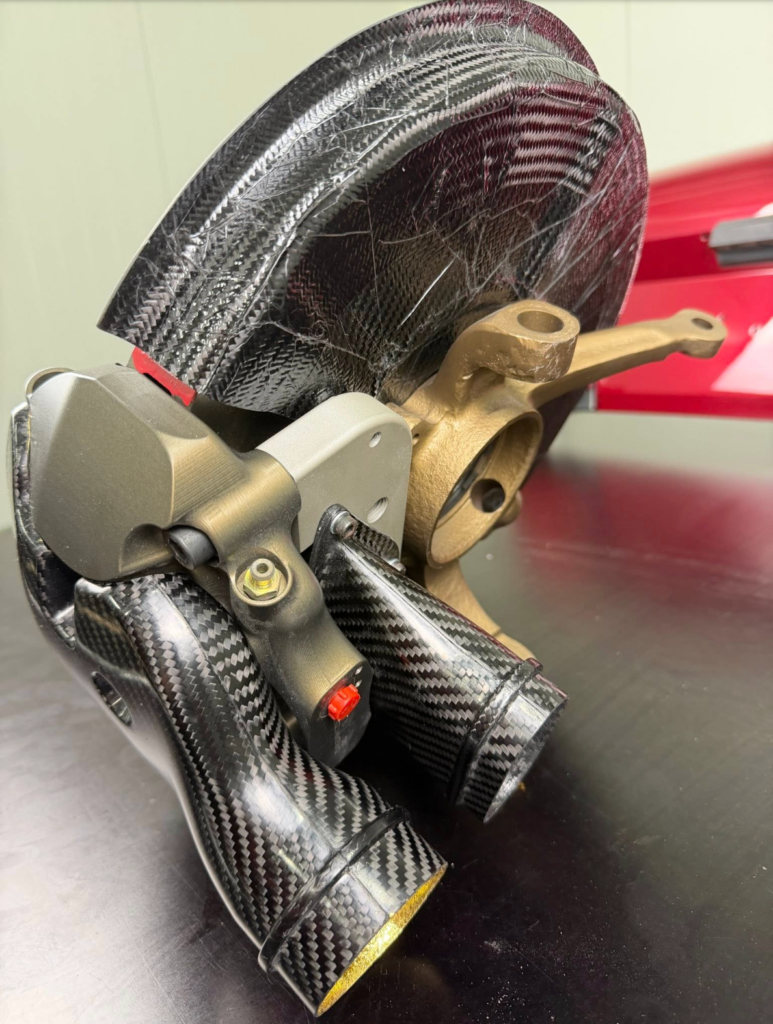
Once the mechanical fit was resolved, attention turned to thermal management. Brake fluid temperature is the quiet failure mode in an upgraded system — more friction material and more braking force means more heat, and if that heat isn’t managed the fluid suffers for it. A cooling duct to direct fresh air to the pistons and pads was the logical next step.
Will the car see temperatures that demand it on a daily basis? No. But push any car hard on a track and brakes get seriously hot — and if a few days a year end up on a circuit, the system should be ready for it. That part was straightforward to justify. What’s harder to explain rationally is that these parts also exist simply because designing and making them was an interesting problem. The geometry constraints, the thermal requirements, the material selection — it was a compelling thought process from start to finish, and that was motivation enough to see it through properly.
Around this time I had conversations with several rally teams running the same calipers in competition. A recurring theme came up: their caliper cooling ducts — metal 3D printed parts — kept breaking. Not from heat or fatigue, but from debris and rocks thrown up during stages. A duct mounted in that position on a rally car takes a beating, and metal printing, despite its reputation for toughness, doesn’t always win that fight. The fracture behaviour simply isn’t forgiving enough in that kind of impact environment.
Carbon was the better answer. A well-designed carbon laminate handles impact differently — it doesn’t notch and crack the same way. With the right layup and a high-temperature prepreg resin system to handle the thermal side of things, it was the right material for the job. The geometry was developed in CAD, printed in nylon first for fit verification, then produced in carbon using prepreg in an autoclave. Stiff, light, heat tolerant, and tough where it needed to be.
When it came time to address disc cooling as well, the original bracket design no longer had room for both ducts. A new bracket was needed — one that integrated the disc cooling duct routing directly. That meant back to CAD, back to the machinist, and another round of iteration. The kind of escalation that’s frustrating in the moment and satisfying in retrospect.
From Personal Build to Something Bigger
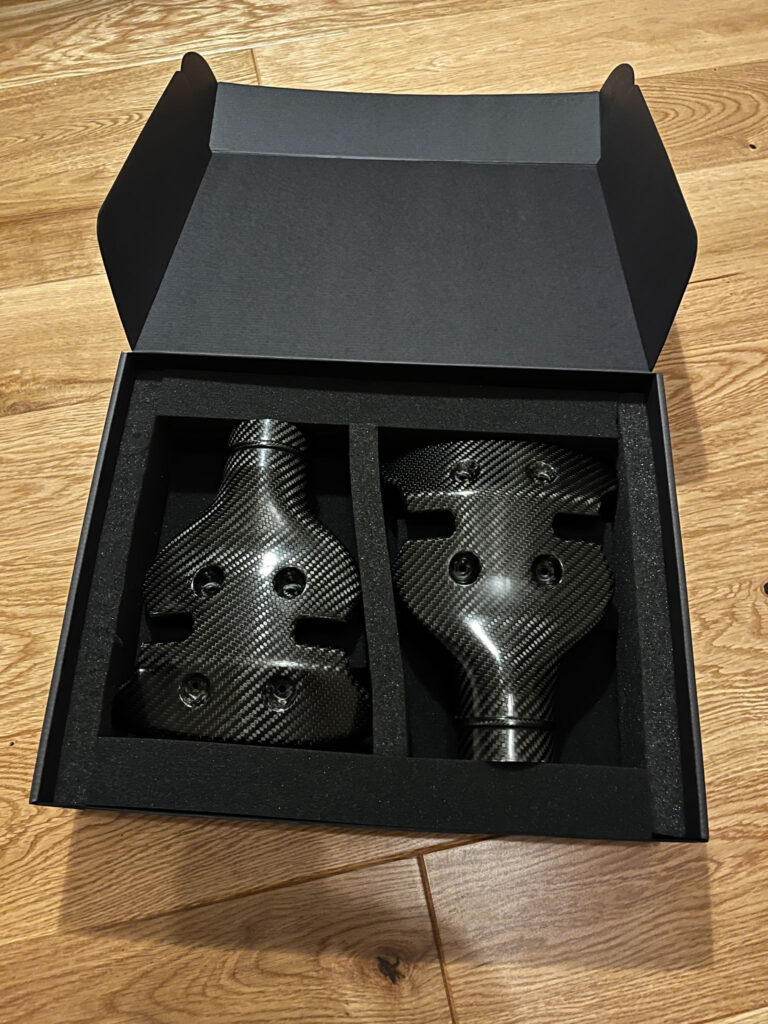
The carbon cooling duct that started as a solution to my own problem turned out to solve someone else’s as well. Rally teams in Northern Ireland and Finland are now running the parts in competition, and the feedback has been positive. That outcome wasn’t planned — it followed naturally from taking the engineering seriously and being willing to iterate until the solution was genuinely good.
That’s the thread that runs through this whole project. A brake upgrade became a fabrication project became a composite manufacturing challenge became a product used in active motorsport. None of it was mapped out in advance. It just kept going in the direction that made sense.
Where It Ended Up
The front brake package is now largely complete — custom calipers, machined adapter, carbon cooling ducts for both caliper and disc, and custom 17-inch wheels that made all of it possible in the first place. Brake lines and ducting hoses are the remaining work before this chapter closes.
It escalated well beyond the original plan. Most good projects do.